
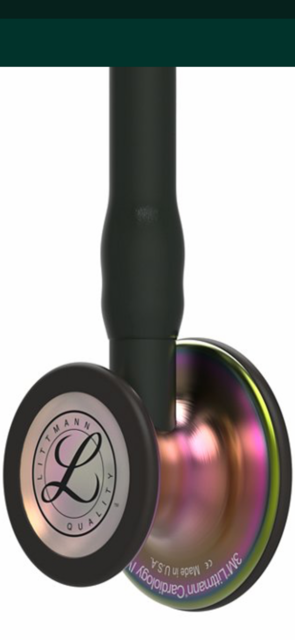
Rene Laennec invented the stethoscope in 1816. It is still used today although with newer technology, they have been improvements and recently, even have amplification processes.
I’ve only had two stethoscopes since I began my career as a medical student in 1983. Unfortunately, I lost one had to be replaced about 25 years ago. However, I purchased the same model, Littman, and this has been with me almost wherever I go. I believe my stethoscope is somewhat special and lucky.
My nurse, Sandy, worked in my office. She also runs the rehab at Birchwood. Sandy would find my stethoscope left behind after I did my rounds. This usually happened at the nursing home. I was the medical Director at the time. I was rushing between the nursing home and my office. She thought this was ominous!! If I did not have it with me, someone would die!! In fact, I think this was essentially true. It became an emergency when she found it. She should have me paged immediately or have it delivered back to the office.
My stethoscope, on more than one occasion, has helped make some remarkable diagnoses. A gentleman came to me for his first visit. He had been sick for a period and was becoming more ill. After careful review of his symptoms, I listened to his heart. I found he had a new, distinct, and serious murmur. Within minutes of seeing him, I suspected he had subacute endocarditis, which was true! Such fine listening and attention indeed saved his life. I see his Facebook entries frequently. He and his wife have been enjoying many years of wilderness hiking and adventures since his serious illness. This gives me hope I can improve too.
In another instance, a gentleman experienced shortness of breath and consulted different physicians. They diagnosed him with asthma. In fact, he had a ruptured mitral valve that I was instantly able to detect. He too, after surgery, has had an active life despite a significant medical challenge. The importance of all of the subtle diagnoses made is that I had the time to listen to the patient. I examined them as I was taught early in my training. Perhaps the way it should be.
One of the great strengths of my career has been my ability to make diagnoses, sometimes unusual ones. In my own case, I self diagnosed the essence of my problem. However, it took me convincing others to listen carefully to my main symptoms and findings. These efforts eventually led to the correct testing and ultimate diagnosis. There were doubters that needed convincing. One medical student, Issac Sellinger, and his attending physician, Dr Jindal, and their team took me seriously. Great listeners! Timing of diagnosis can be critical. It influences the planning of diagnostic testing. It also affects diagnosing the problem and getting to the right treatment. I’m grateful to those listeners.
I chose to change my practice to an MDVIP practice 15 years ago despite criticism from some. I made this change because I needed time with patients. This allows me to listen and understand their problems. As a result, I can be a better diagnostician. Many of my patients understand this as being true. For some, the practice model has improved their health. Their stories of survival and return to normalcy give me great hope.
I still wonder to this day who found my original stethoscope. Whether it was just lost, or stolen. I have no idea. I hope that person has used it carefully and skillfully. Perhaps it has helped make some subtle diagnoses during their career.
On this Friday morning, it is day 14 of being in the hospital. I will hold on to the encouragement from all my patients who have suffered similar challenges. I’m off for 2 hours of plasmapheresis. Ugly proteins must be eliminated. Then I will undergo 3 hours of hemodialysis to rid my body of toxins and fluid. That was not on my schedule for today, but I will attend!


Leave a Reply to Michael B GoldbergCancel reply